
Hemp's Omega Balance, ALA and Beyond
Most of hemp seed's fat is polyunsaturated, and it arrives in a ratio of linoleic to alpha-linolenic acid that sits close to the range nutritionists often recommend. Articles here explain what ALA is, why the body converts only a small share of it to EPA and DHA, and where the less common gamma-linolenic and stearidonic acids come in. You will also find guidance on heat, light and storage, since these fats degrade faster than most cooking oils.
3 articles
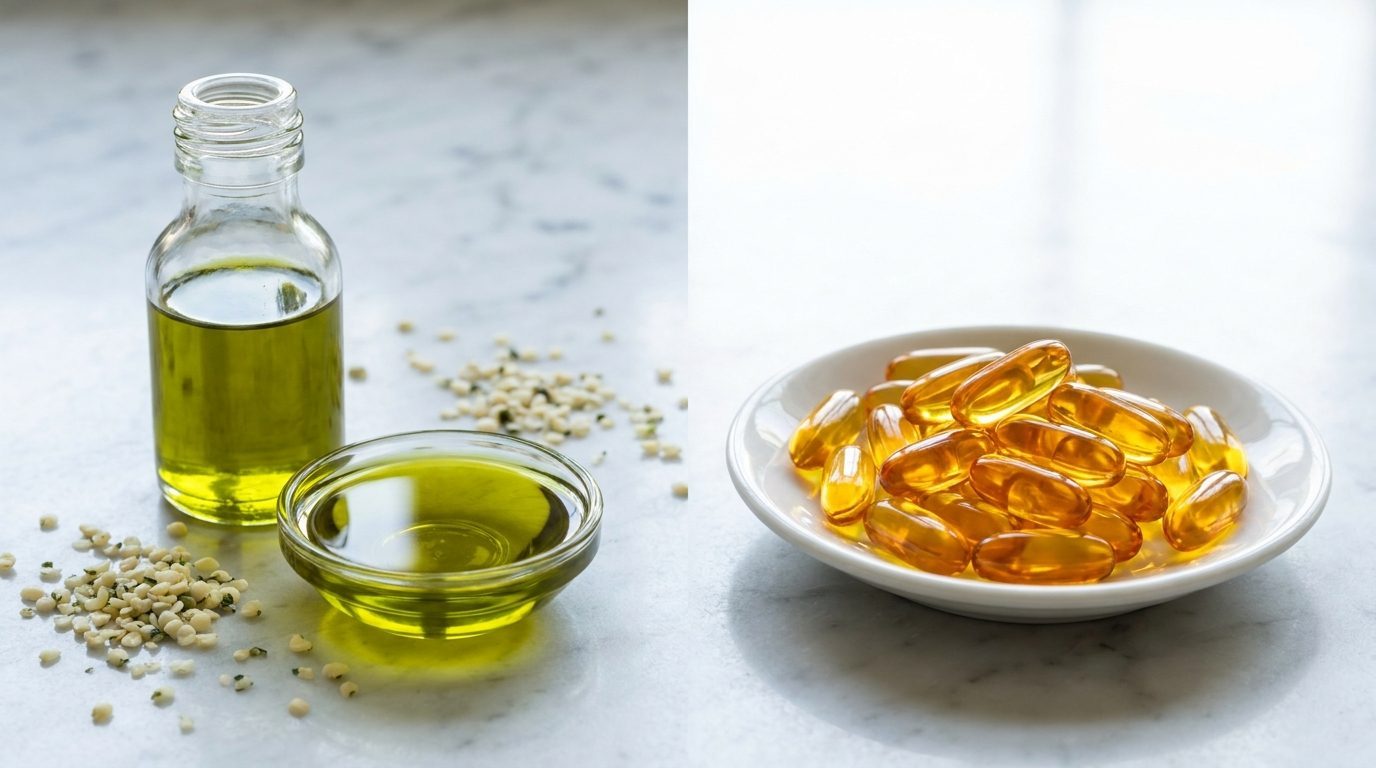
Hemp Seed Omega-3 vs Fish Oil: Does ALA Actually Convert to EPA and DHA?
Plant omega-3 from hemp is ALA, not the EPA and DHA your body uses directly. This is an honest look at how poorly ALA converts, when hemp is enough, and when algae oil still matters.

Hemp Seed vs Flaxseed: How They Actually Differ
Flax is the omega-3 and lignan specialist; hemp is the protein and all-round seed. The detailed comparison, the omega-3 caveat that applies to both, and how to choose or combine them.
Omega-3, Omega-6 and GLA in Hemp Seed
The hemp seed fat profile: 55 percent linoleic acid, 17 percent ALA, 3 percent GLA, balanced at a 3:1 omega-6 to omega-3 ratio. Why the ratio matters and how it compares to other seeds.